Unique Public Transport in the Philippines | What Is a Jeepney?
Hello, this is Awork Academy. In Japan, it is common to use buses and trains to travel between cities, but when you go abroad to study a language, the tran
Free Consultation2 min read / Published: 2026-03-11
Hello, this is Awork Academy.
In Japan, it is common to use buses and trains to travel between cities, but when you go abroad to study a language, the transportation situation is quite different.
This time, we introduce the Jeepney, a representative form of mass transit in the Philippines that is used by many people.
< What Is a Jeepney?>
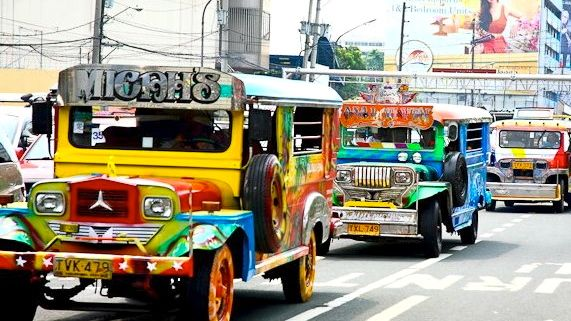
Just as Japan has buses, the Philippines has jeepneys. The Philippines has buses too, but they are mainly used for travel between cities. Jeepneys, on the other hand, are a uniquely Philippine local means of transport.
They are vehicles converted from US military jeeps left behind after World War II, with extra seating added at the rear and brightly decorated exteriors. Their appearance is very distinctive, making them one of the transport options that feel truly Philippine.
< Advantages of Jeepneys >
Low fares
Sturdy body
Widely used by locals
Capacity varies with the length of the vehicle, from 16 up to 54 passengers.
A 54-seater can sometimes carry as many people as a small train.
< How to Ride a Jeepney >
It is a little similar to Japanese buses.
The destination is displayed on the windshield
There are basically no bus stops
When you see a jeepney on the road, raise your hand to stop it
The fare is usually around 9-10 pesos, and students and seniors get a 20% discount.
A fare chart is sometimes posted inside the vehicle.
How to Get Off
While lightly tapping the ceiling two or three times,
"Para po!"
call out to get off.
Because there are no fixed stops, you can get on and off freely, but this can sometimes cause traffic congestion.
< Is It Okay for Tourists and International Students to Use Them? >
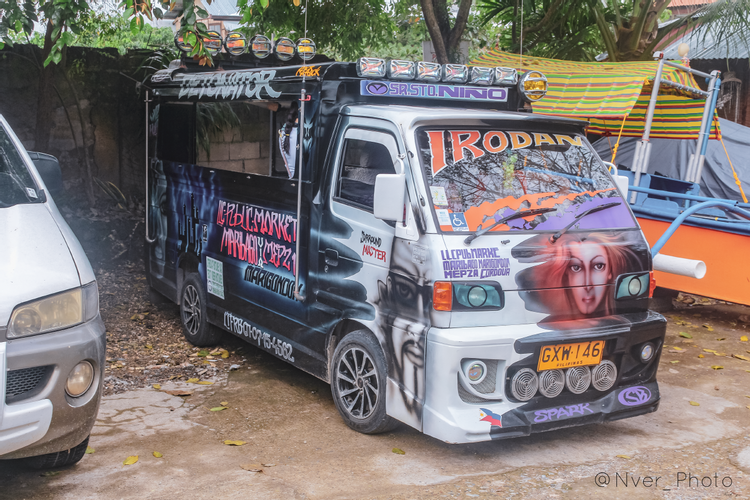
Jeepneys are a well-known means of transport, but tourists need to be a little careful.
If your bag has no lock, there is a risk of theft
Because the vehicle has no windows, belongings can be snatched from outside
Short-term travelers and those visiting for sightseeing are safer using:
Trains
Airplanes
Licensed taxis
and the like.
Long-term international students are also recommended to use:
School commuter buses
Shuttle buses
Trains
and the like.
Summary
This time, we introduced the Jeepney, a representative form of mass transit in the Philippines.
It is a charming vehicle that is truly Philippine, but please pay close attention to safety when using it.
Awork Academy's official website neatly summarizes information on working holidays and language study abroad by country.
If you have any questions, please feel free to contact us anytime.
Start Your Consultation Today
Our expert counselors will recommend the right school and program for you.
Free Consultation